Modern Gun Storage Knowledge Center
The SecureIt Armory Method
Field-tested guidance on military armory design, modular safes, defensive readiness, and the safe-buying myths worth questioning.
Modern Gun Storage
4 articles
The Problem With Old-Style Gun Safes
Understanding the Frustration & Finding the Solution
Modernizing Home Gun Storage
Modern firearm ownership has outgrown traditional storage. Firearms today are modular systems, not static objects. Rifles are configured for specific roles, updated with new optics, accessories, and suppressors, and supported by growing volumes of gear. Homes change. Families change. Defensive plans evolve. Storage that cannot adapt becomes obsolete almost immediately.
What Makes a Gun Safe Actually Safe
A gun safe is often judged by thickness of steel, fire ratings, or advertised capacity. None of those metrics define how safely firearms are actually stored or accessed. Real safety is determined by how a storage system performs in real conditions — during access, under stress, and over years of use.
Who Controls Access?
When it comes to firearm storage, most conversations focus on steel thickness, locking bolts, and break-in resistance. But in real-world scenarios, access control is just as critical—if not more. A firearm secured behind a system that is difficult to open under pressure isn't truly accessible when it matters most.
Military Weapon Storage
5 articles
How SecureIt Modernized Military Armories
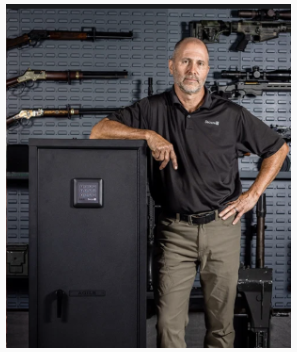
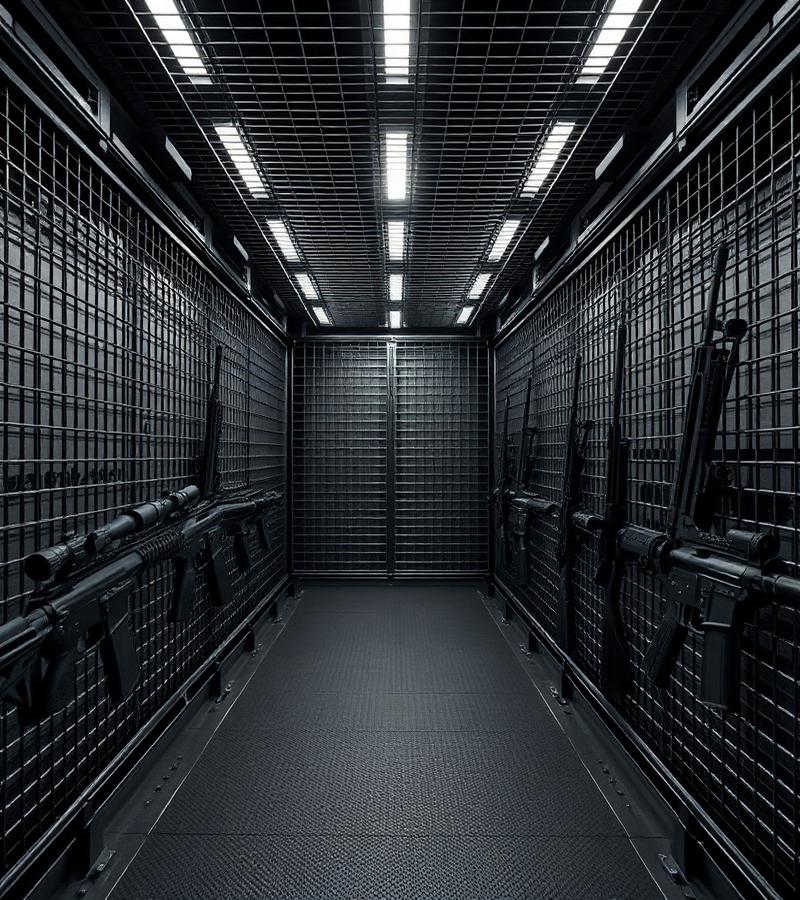
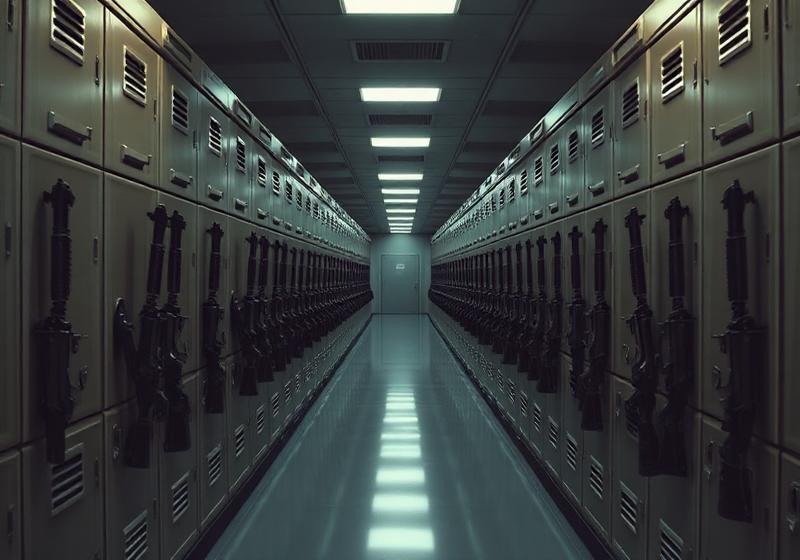
U.S. Army Special Forces Command brought SecureIt in when their armories could no longer keep pace with modern weapon systems. What I found wasn't a weapon problem—it was a storage problem. Over an 18-month assessment, I traveled to every Army Special Forces armory. I spent full days with armorers, observing workflows, inventory procedures, issue-and-return cycles, and compliance requirements. Everywhere I went, the challenges were the same: maintaining readiness, protecting highvalue equipment, and staying compliant using storage systems that were never designed for modern rifles—or the gear that supports them.
Modernized U.S. Military Armories
U.S. Army Special Forces Command brought SecureIt in when their armories could no longer keep pace with modern weapon systems. What I found wasn't a weapon problem—it was a storage problem. Over an 18-month assessment, I traveled to every Army Special Forces armory. I spent full days with armorers, observing workflows, inventory procedures, issue-and-return cycles, and compliance requirements. Everywhere I went, the challenges were the same: maintaining readiness, protecting highvalue equipment, and staying compliant using storage systems that were never designed for modern rifles—or the gear that supports them.
Military Principles Applied to the Home
For more than 25 years, SecureIt has worked inside U.S. military armories to solve the same problems civilian firearm owners face today: inefficient access, damaged equipment, poor organization, and storage systems that cannot adapt. The difference is that the military was forced to confront those failures. Civilian storage largely has not.
CradleGrid™ Technology & Patents Explained
CradleGrid™ is the patented modular weapon-storage architecture that transformed U.S. military armories and now defines the modern standard for civilian firearm organization, gear integration, and rapid, reliable access. Traditional safes rely on fixed shelves, foam, carpet, and outdated barrel notches. These designs were never engineered to adapt to modern firearms—much less the explosion of supporting gear such as optics, night vision, armor, communications equipment, magazines, belts, and mission-specific loadouts. As firearms evolved, storage did not.
Straight-Line Access & Retrieval Efficiency
When I began working inside U.S. Army Special Forces armories, one problem appeared everywhere: it took too long to retrieve weapons, and far too many were being damaged in the process. Rifles were stacked and tangled in deep racks. Optics struck shelves, adjacent weapons, and sidewalls. Armorers routinely had to move two or three rifles just to access one. Under operational pressure, that level of inefficiency isn't just inconvenient—it's unacceptable.
Agile Modular Safes
3 articles
Why Modularity Beats Capacity
A "48-gun safe" does not hold 48 guns. It never has. Gun-safe capacity ratings are not based on real firearms, real testing, or real storage. They are based on one thing only: how many small barrel notches a manufacturer can cut into a particle-board shelf. If they can cut 48 notches, they label it a 48-gun safe. No rifles are tested. No optics are considered. No suppressors, accessories, spacing, or retrieval are accounted for. There is no connection to real-world use.
The Problem With Heavy Gun Safes
Gun safes are supposed to be heavy. That assumption has gone unchallenged for decades. It’s repeated in marketing, reinforced by salespeople, an
Agile™ Command Center Systems
As firearm collections grow, most storage solutions eventually collapse under their own limitations. Traditional safes were designed to hold a fixed number of rifles in a single steel box. Once that box fills up, owners are forced to stack rifles together, bury gear in unrelated locations, and compromise access and organization.
The Truth About Gun Safes
7 articles
The Fire Rating Myth
For decades, gun-safe manufacturers have promoted fire ratings as a primary measure of quality. Consumers are encouraged to compare safes by their claimed
Heat Soak: Why Heavy Gun Safes Fail
For decades, the gun safe industry has promoted one simple idea: Heavier steel equals better fire protection.
The Security Myth
For decades the gun-safe industry has promoted a simple message: heavier safes are more secure. Marketing materials highlight steel thickness, door bolts, and total weight as proof that a safe can resist burglary. The idea sounds logical. A heavy object seems harder to steal.
The Capacity Myth
Why gun safe capacity ratings don't reflect real storage — and how modern rifles, optics, and accessories change the math of every armory.
The Drywall Problem
Most gun owners assume the materials inside a safe exist to protect their firearms. In many cases, the opposite is true.
Decentralized Storage for Real Security
One of the least discussed problems in the gun safe industry has nothing to do with steel thickness, lock types, or fire ratings. It has to do with mobility.
What Actually Makes a Safe Safe
Most people believe gun safe security comes down to thicker steel, stronger doors, more locking bolts, and more weight. Those elements matter, but they are not the foundation of real security. In the real world, a safe is not a complete security system—it is just one component within a larger system. Traditional gun safes are designed around marketing claims and outdated assumptions, not real-world use. They prioritize specifications that are easy to advertise rather than performance that matters day to day. The result is predictable placement, limited access, and systems that don't adapt.
Defensive Readiness & Firearm Storage
3 articles
HSFA™: The Only Lock Designed for Real Stress
In a real defensive encounter, the human body does not behave the way people expect. Heart rate increases rapidly. Hands shake. Vision narrows. Fine motor control deteriorates. Under these conditions, tasks that normally feel simple can suddenly become difficult or unreliable.
Decentralized Defensive Storage
A defensive firearm cannot protect you if it is stored in the wrong place. For decades, gun owners were taught that the safest way to store firearms was inside one large safe located in a basement, garage, or closet. While this approach may reduce theft risk in some situations, it does little to support defensive readiness.
Integrating Firearms and Gear for Defensive Readiness
Many people assume defensive readiness begins with choosing the right firearm. It doesn't.