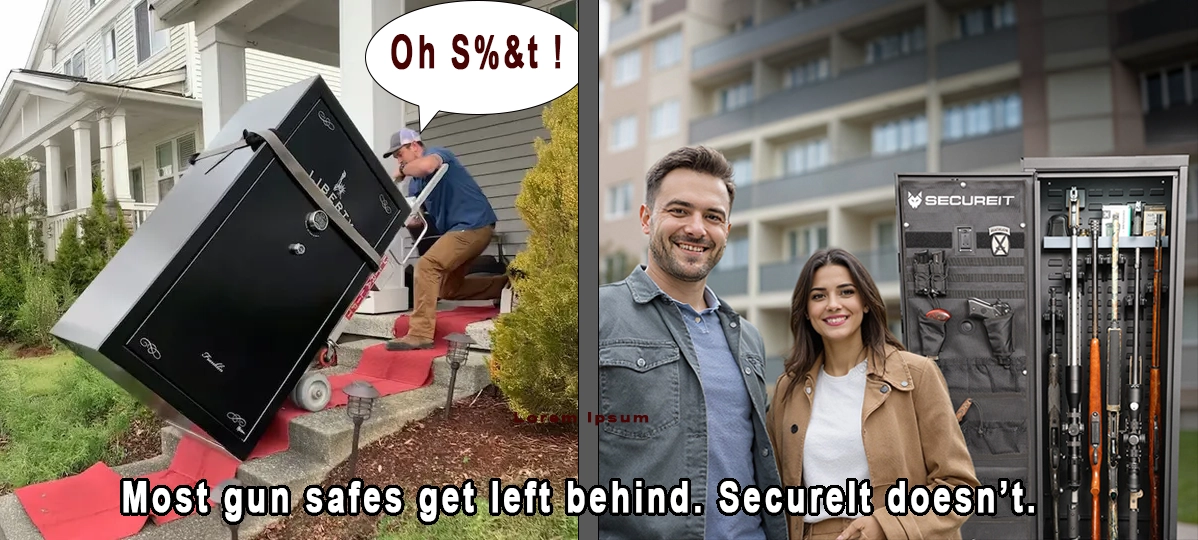
Heavy Safes
Heavy Safes
Gun safes are supposed to be heavy. That assumption has gone unchallenged for decades. It’s repeated in marketing, reinforced by salespeople, and accepted by consumers as a sign of security. But weight is not security—and in real-world use, it creates more problems than it solves.
Why Gun Safes Are So Heavy
Why Gun Safes Are So Heavy
Traditional gun safes are built around one idea: heavier must be better. The logic is simple—heavier safes are harder to move, and harder to move must mean more secure.
But modern theft doesn’t work that way. Safes are not typically carried out of a home. They are attacked in place—often through the sidewalls using common tools. In these scenarios, weight provides little to no advantage.
Heavy steel also creates another often-overlooked problem during fires: heat soak.
As thick steel absorbs thermal energy, it stores and transfers that heat inward over time—raising internal temperatures long after the outer fire exposure peaks. In prolonged convective fire conditions, heavier safes can actually increase heat transfer to firearms, optics, and gear.
This is one of the least understood problems in traditional safe design.
Read: Heat Soak — Why Heavy Safes Fail in Fire
So why are safes still built this way? Because weight is easy to market—and it drives replacement.
Weight Does Not Equal Security
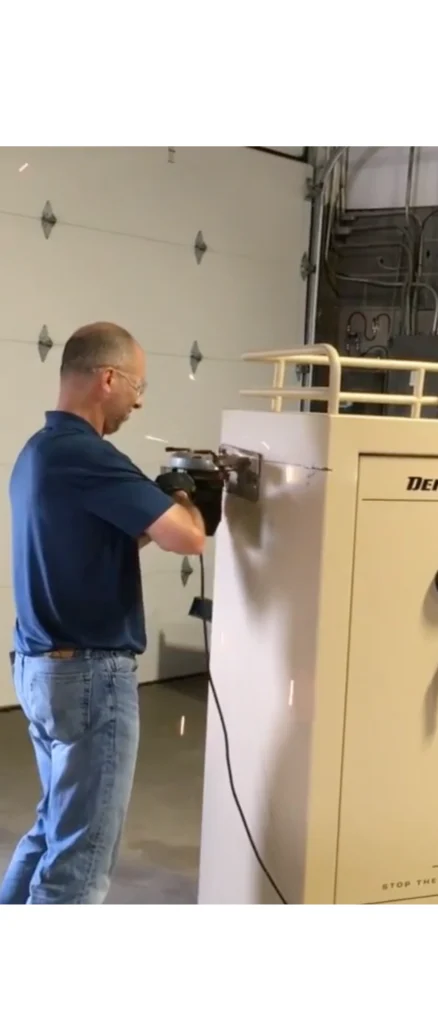
Weight Does Not Equal Security
The idea that heavier safes are more secure assumes that weight prevents theft. In reality, most safes are not removed—they are attacked in place.
And when that happens, the point of attack is rarely the door.
It’s the side walls.
Across most consumer gun safes—regardless of price point—the side panels are made from relatively thin steel compared to the reinforced door. This creates a consistent vulnerability. With common cutting tools, these panels can be breached far more quickly than most people expect.
At that point, overall weight becomes irrelevant.
Whether a safe weighs 300 pounds or 1,000 pounds does not significantly change how it performs against a direct sidewall attack. Security is not determined by how heavy a safe is—it’s determined by how it performs under real-world conditions.
The Hidden Cost of Weight
The Hidden Cost of Weight
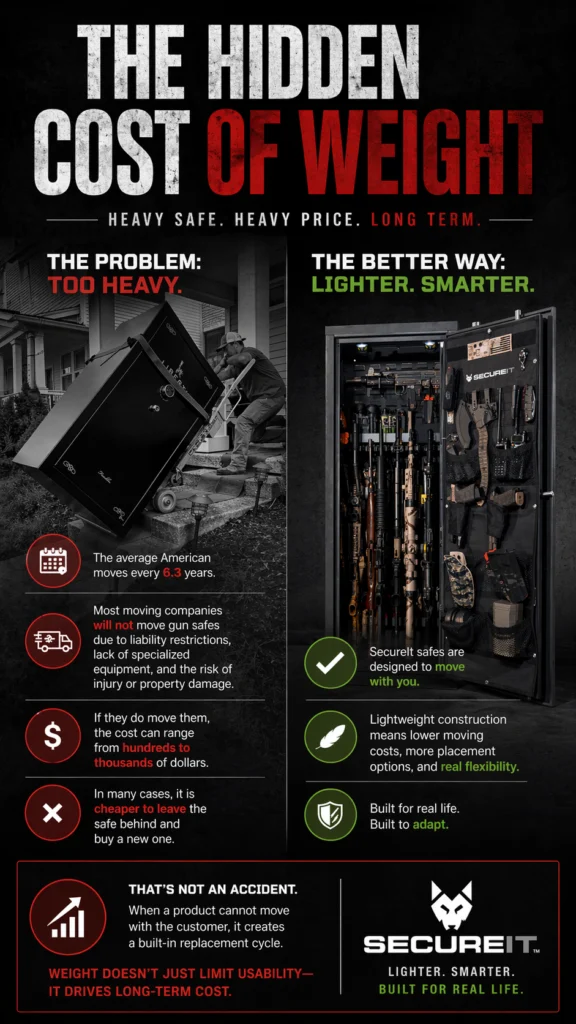
The average American moves every 6.3 years. Traditional gun safes are not designed for that reality.
Most moving companies will not move gun safes due to insurance liability restrictions. This forces you to hire a safe mover. Moving a safe to a new home can cost between $800 and $2500 depending on distance.
In most cases, it is cheaper to leave the safe behind and buy a new one.
That’s not an accident. When a product cannot move with the customer, it creates a built-in replacement cycle. Weight doesn’t just limit usability—it drives long-term cost.
A heavy gun safe becomes a fixed object. It limits where you can place it, how you access your firearms, and how your storage adapts over time.
Most end up in a garage, basement, or a single, predictable location. That’s not a security advantage—it’s a constraint.
The Real-World Problem: Immobility
The Real-World Problem: Immobility
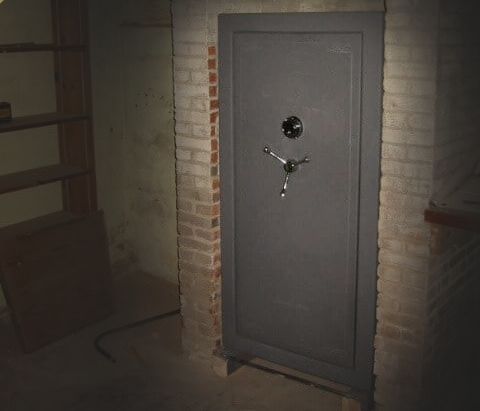
A heavy gun safe becomes a fixed object. It limits where you can place it, how you access your firearms, and how your storage adapts over time.
Most end up in a garage, basement, or a single, predictable location. That’s not a security advantage—it’s a constraint.
Centralization Creates Risk
Centralization Creates Risk
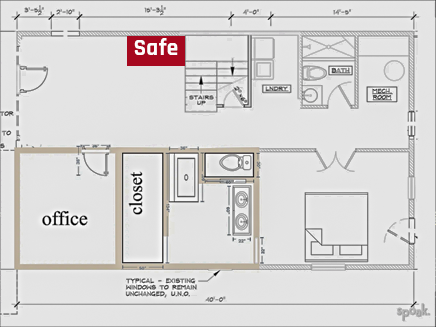
Heavy safes force centralized storage. All firearms go into one large, immovable container.
From a security standpoint, this creates a single point of failure, a predictable target, and limited access in critical situations.
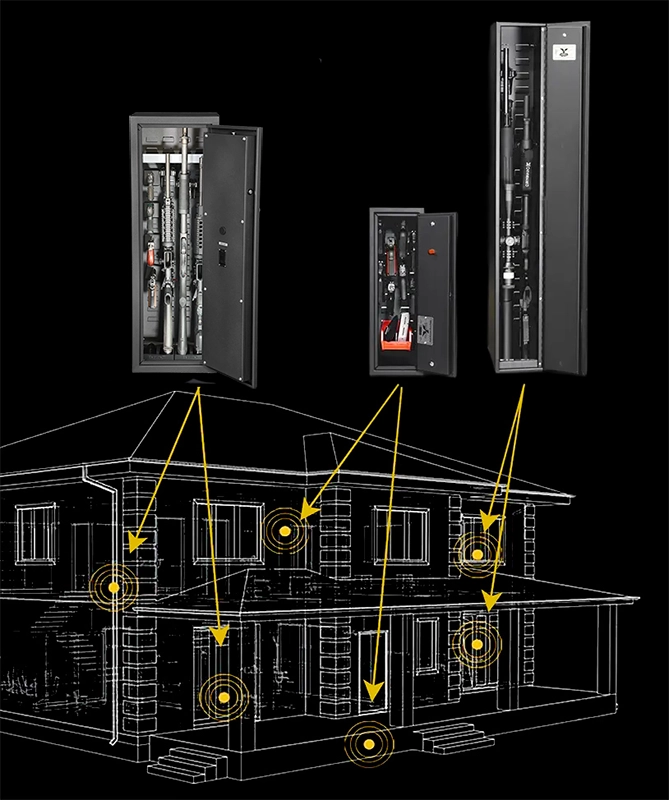
Modern storage moves in the opposite direction—distributed placement, reduced predictability, and access where it matters. Weight works against all of these.
The Modern Approach: Freedom Through Mobility
The Modern Approach: Freedom Through Mobility
Modern firearm storage is not defined by weight—it’s defined by adaptability.
Lighter, modular safes provide freedom of location—place firearms where they are needed; freedom of decentralization—distribute storage instead of centralizing it; and freedom to relocate—move and adapt as your life changes.
This is how modern systems are designed. In military environments, storage must adapt to changing weapons, missions, and layouts. The same principle applies in the home.
A storage system should evolve—not stay fixed.
The Bottom Line
Weight became a proxy for security because it was easy to understand. But it was never a reliable measure of performance.
Heavy gun safes do not prevent modern attacks, limit placement and adaptability, create centralized risk, and are often left behind when people move.
Modern storage replaces weight with design. The safe that protects your firearms should move with your life—not be left behind by it.
By Line

By Line
Tom Kubiniec Role: President CEO, SecureIt Tactical 2001, the Department of Defense called on CEO Tom Kubiniec to transform their cluttered weapon racks into organized, efficient weapon storage systems. Tom Kubiniec is the President and CEO of SecureIt Tactical and a recognized authority on firearm storage and armory design. He has spent decades designing, evaluating, and correcting weapon storage systems, including the modernization of armories used by U.S. military and law-enforcement units. Kubiniec is the inventor of CradleGrid®, a modular weapon-storage system developed to replace the fixed interiors and poor access common in traditional gun safes. His work centers on building storage systems that protect equipment, allow clean and repeatable access, and remain functional as firearms and gear change over time.